Can Your Mind Help Heal Your Body? Insights from Dr David Hamilton
Your brain often responds to imagined experiences almost the same way it responds to real ones. Thoughts, visualisation, and emotions can influence physical processes in the body.
5/8/20263 min read
What if the way you think, imagine, and move could influence your physical health more than you realise?
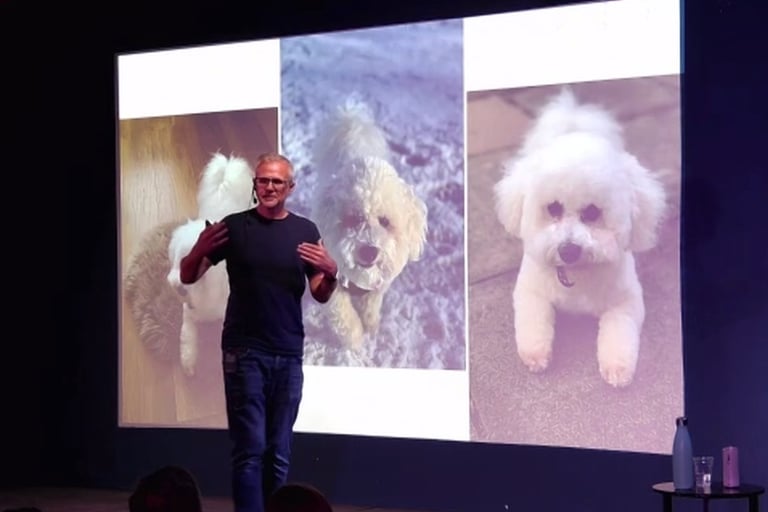
During a recent Seed talk, scientist and author Dr David Hamilton explored the surprising science behind the mind-body connection. The idea that our thoughts, expectations, and emotions can influence real biological processes in the body.
Rather than presenting this as mystical or abstract, Hamilton explained the concept through neuroscience, clinical research, and real-world examples. From the placebo effect to visualisation practices used by athletes and patients recovering from illness, he showed how the brain can activate the same neural pathways whether we are physically doing something or vividly imagining it.
The result is a strong insight: the mind is not only observing the body… it is intently shaping what happens inside it.
10 Key Takeaways
1. The Brain Often Responds to Imagined Actions Like Real Ones
Brain scans show that when we vividly imagine performing an action, the same neural circuits activate as when we actually do it. This is why imagery rehearsal is used in sports training and rehabilitation.
2. Expectations Can Trigger Real Biological Changes
The placebo effect demonstrates that the brain can release natural chemicals (like endorphins and dopamine) simply because we expect a treatment to work.
3. Gratitude Can Physically Reduce Stress in the Body
Practising gratitude can reduce stress responses, lower blood pressure, and shift brain activity away from fear-driven regions.
4. Movement Can Shift Your Emotional State
Hamilton described how simple movements, like dancing or even subtle gestures, can shape brain chemistry and mood.
Victory dancing can be used to interrupt negative emotional moods.
5. Stress Redirects Brain Resources
When we experience fear or embarrassment, the brain reallocates resources from thinking regions to survival responses.
This is why people often experience a “mind blank” during stressful moments.
6. Kindness and Compassion May Be More Powerful Than Stress
Research suggests positive emotions like compassion activate brain systems that counteract stress responses.
Thinking kindly about others can literally dial down activity in brain regions linked to fear and anxiety.
7. Visualisation Can Support Physical Rehabilitation
Mental rehearsal has been studied in conditions such as stroke recovery and Parkinson’s disease, where imagining movements may activate neural pathways that support physical function.
8. Writing Down Stress Can Improve Health
Expressive writing, as in spending around 20 minutes writing about stressful experiences, has been shown in research to reduce stress and improve immune function.
9. The Nocebo Effect Shows the Power of Negative Expectations
Just as positive expectations can trigger healing responses, negative expectations can produce symptoms. Although evidence suggests these effects usually influence perceived symptoms rather than causing disease itself.
10. Ancient Procedures and Modern Science May Be Meeting in the Middle
Hamilton suggested that practices such as meditation, prayer, and visualisation may share common psychological and neurological mechanisms - now being explored through scientific research.
Final Reflection
One of the most interesting ideas from the talk was that the mind may act less like a passive observer and more like an active participant in health.
While thoughts alone are not a substitute for medical treatment, research increasingly suggests that how we think, imagine, and emotionally respond can meaningfully influence the body's internal systems.
And sometimes, as Hamilton boosted, the first step can be doing a wholehearted victory dance.
Curious to Learn More?
If you’d like to explore these ideas more:
Dr David Hamilton has a website here, on Instagram as davidrhamiltonphd, and on Facebook here. He has also some courses on his website.
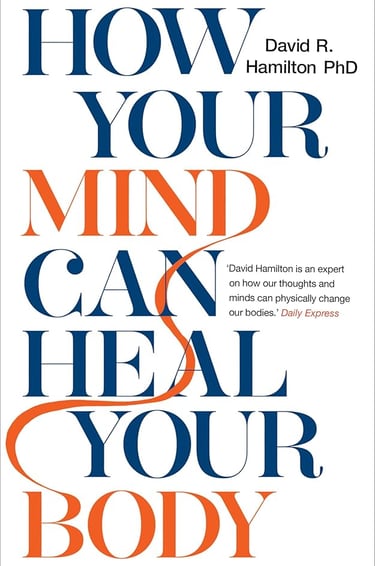
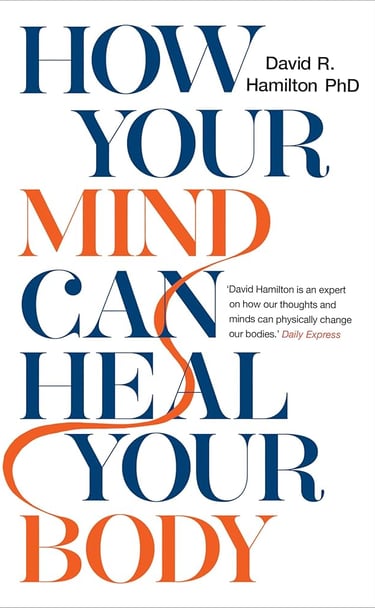
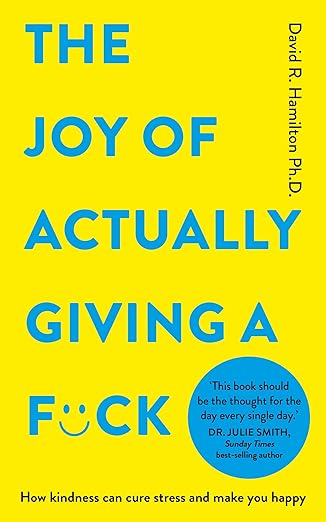
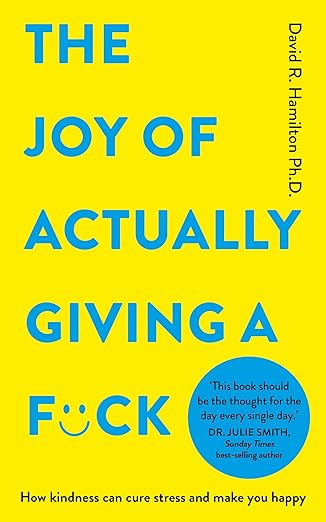
His books on neuroscience, compassion, and the mind–body connection - especially for "How Your Mind Can Heal Your Body" and "The Joy of Actually Giving a F*ck: How Kindness Can Cure Stress and Make You Happy".
Talks and events organised by Seed Talks (who helped host this event)
Hamilton has written extensively about the science of kindness, placebo effects, visualisation, and compassion and frequently speaks at conferences and public talks around the world.